
Vulnerability & Application Security
The Rise of Shadow APIs: The Hidden Connections Attackers Are Searching For
The API You Cannot See Could Become the Door Attackers Walk Through Your organization has invested in cybersecurity. Firewalls are configured. Endpoints are protected. Employees…
The API You Cannot See Could Become the Door Attackers Walk Through
Your organization has invested in cybersecurity. Firewalls are configured. Endpoints are protected. Employees receive security awareness training. Applications go through security reviews.
Everything appears controlled.
But behind the visible systems that security teams manage, another layer exists.
Thousands of digital connections silently exchange information every second.
A customer places an order. A payment is processed. A user logs into an application. A notification is delivered. A report is generated.
Behind each interaction, APIs are working in the background.
They connect applications, transfer information, and allow modern businesses to operate at digital speed.
But what happens when those connections become invisible? A testing API that was never removed. An old integration that nobody owns. A forgotten endpoint from a previous project. A service created during rapid development that escaped security review.
These hidden connections create a growing cybersecurity challenge:
Shadow APIs.
And attackers are actively searching for them.
The Invisible Foundation of Modern Business
APIs, or Application Programming Interfaces, are the communication channels that allow different software systems to exchange information.
They act as bridges between applications.
For example:
A banking application uses APIs to communicate with account systems.
An online shopping platform uses APIs to connect customers, inventory, and payment providers.
A healthcare application uses APIs to exchange information between systems.
A business dashboard uses APIs to collect data from multiple sources.
Without APIs, modern digital services would be slower, less connected, and far more difficult to scale.
However, as organizations create more applications and integrations, the number of APIs continues to grow.
And with growth comes a new challenge: Visibility.
Organizations may know the applications they operate.
But do they know every API connected to those applications?
What Are Shadow APIs?
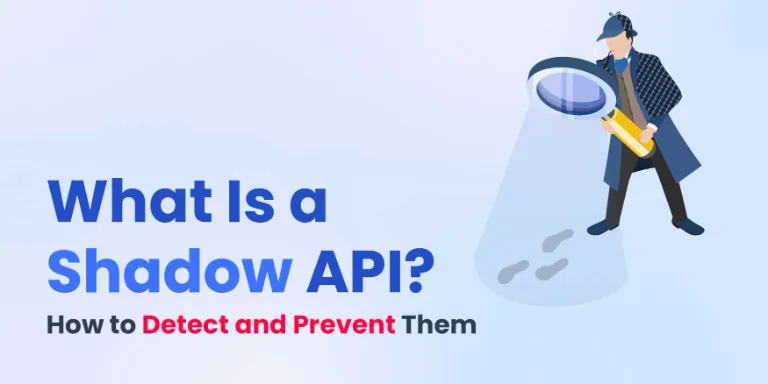
A Shadow API is an API that exists within an organization’s environment but is unknown, undocumented, unmanaged, or outside established security processes.
Unlike official APIs that security teams intentionally monitor, Shadow APIs often operate outside normal governance.
They may exist because:
- A developer created an API for testing
- A project team deployed a quick solution
- A third-party integration was added
- An old application was forgotten
- A legacy system remained active
The API itself may not be malicious.
The danger comes from the lack of visibility and control. An organization cannot secure an API it does not know exists.
Why Are Shadow APIs Becoming More Common?
The growth of Shadow APIs is closely connected to how quickly businesses are evolving.
Organizations are under constant pressure to:
- Release applications faster
- Improve customer experiences
- Connect more platforms
- Adopt cloud technologies
- Automate business processes
Speed has become a competitive advantage.
However, when development moves faster than security governance, hidden risks begin to appear.
1. The Rise of API Sprawl
One of the biggest challenges organizations face today is API sprawl.
API sprawl occurs when the number of APIs grows beyond an organization’s ability to properly manage them.
A company may have:
- Customer-facing APIs
- Internal APIs
- Partner APIs
- Testing APIs
- Legacy APIs
- Third-party APIs
Over time, tracking every API becomes increasingly difficult. Some APIs may be actively maintained. Others may be forgotten.
Some may still be processing sensitive information without anyone realizing it.
2. Development Speed Creates Visibility Gaps
Modern development teams often use agile methodologies and continuous delivery practices.
New features can be created and deployed quickly.
A developer may create an API to:
- Test a feature
- Support an internal process
- Connect a new service
The problem occurs when temporary solutions become permanent.
An API created for a short-term purpose may continue operating months or years later.
Without documentation and ownership, it becomes invisible infrastructure.
3. Third-Party Connections Expand the Attack Surface
Businesses rarely operate alone.
They depend on external providers for:
- Payment processing
- Customer relationship management
- Cloud services
- Analytics platforms
- Communication tools
Every external connection introduces another API. While third-party integrations improve efficiency, they also expand the organization’s attack surface.
A forgotten API connection can become a pathway into sensitive systems.
4. Legacy Systems Keep Old APIs Alive
Many organizations continue relying on older systems because they support important business operations.
However, legacy APIs may introduce additional risks:
- Outdated authentication methods
- Missing security controls
- Lack of documentation
- Unknown ownership
An old API may continue functioning quietly until an attacker discovers it.
How Attackers Discover Shadow APIs
Attackers do not need an organization to publicly announce its APIs.
They use various techniques to discover hidden endpoints.
These may include:
- Examining application behavior
- Reviewing exposed information
- Identifying API patterns
- Scanning publicly accessible services
- Analyzing mobile applications
The same connections that enable business functionality can reveal valuable information about an organization’s environment.
Why Shadow APIs Are Dangerous

A Shadow API can become a security weakness in several ways.
- Broken Authentication
Some unmanaged APIs may not properly verify who is accessing them.
Attackers may exploit weak authentication controls to gain unauthorized access.
- Excessive Data Exposure
An API may provide more information than necessary.
For example, an API designed to display customer information may unintentionally expose:
- Personal details
- Internal identifiers
- Account information
- Weak Authorization Controls
Authentication answers: “Who are you?”
Authorization answers: “What are you allowed to access?”
A poorly secured API may allow users to access information beyond their permissions.
- Lack of Monitoring
If security teams do not know an API exists, they may not monitor:
- Suspicious requests
- Unusual activity
- Data transfers
- Attack attempts
An attacker could exploit an API without triggering immediate detection.
Shadow APIs and Data Privacy Risks
APIs often serve as pathways for sensitive information.
They may process:
- Customer records
- Employee information
- Financial data
- Authentication details
- Business transactions
For organizations handling personal data, unmanaged APIs create additional privacy challenges.
A data breach does not only happen when attackers break into databases.
It can happen when data flows through an overlooked connection.
This makes API governance an important part of information security and privacy management.
Real-World Impact of Shadow API Risks
A compromised Shadow API can lead to:
- Data Exposure – Sensitive information may become accessible to unauthorized individuals.
- Account Takeover – Weak API authentication can allow attackers to compromise user accounts.
- Business Disruption – Attackers may manipulate API functions or disrupt connected services.
- Compliance Challenges – Organizations may struggle to demonstrate proper control over:
- Data access
- Information flows
- Security responsibilities
How Organizations Can Defend Against Shadow APIs
1. Discover and Maintain an API Inventory
Organizations should understand:
- What APIs exist
- Where they are located
- Who owns them
- What data they access
- Whether they are still required
Visibility is the foundation of API security.
2. Establish API Governance
Every API should have:
- A clear owner
- Documentation
- Security requirements
- Approval processes
- Retirement procedures
An API without ownership becomes a future security risk.
3. Secure API Access
Organizations should implement:
- Strong authentication
- Least privilege access
- Secure authorization mechanisms
- Proper credential management
4. Monitor API Activity
Continuous monitoring can help identify:
- Unexpected API usage
- Abnormal requests
- Suspicious access patterns
- Potential attacks
5. Include APIs in Security Assessments
APIs should be included in:
- Vulnerability assessments
- Penetration testing
- Risk assessments
- Security audits
Security reviews should cover not only applications but also the connections that power them.
The Future: Security Must Follow Connectivity
The digital world is becoming increasingly connected.
Organizations are adopting:
- Cloud platforms
- Artificial intelligence
- Microservices
- Digital ecosystems
APIs will continue to grow. The solution is not reducing connectivity.
The solution is creating visibility, governance, and security around every connection.
The question organizations must ask is no longer: “Do we use APIs?”
The answer is almost always yes.
The better question is: “Do we know every API that exists in our environment?”
Related articles
All insights
Attack Surface Management: You Can’t Protect What You Don’t Know Exists
Imagine locking every door and window in your house before leaving for vacation. You double check the front door. The back door is secure. Every window is locked. The alarm system…

Beyond the Fingerprint: Anthropic’s 500 Bug Blowout and the New Security Order
While the industry has long been locked in a cycle of tactical escalation, the introduction of reasoning-based analysis marks a transition from simple pattern recognition to…

How Poor UI/UX Design Creates Cybersecurity Risks
Cybersecurity is often viewed through a purely technical lens such as firewalls, encryption, intrusion detection systems, and access controls. However, an equally important and…