
Identity & Access Security
Why Passwords No Longer Matter: The Rise of Infostealer Malware and Session Hijacking
“Your password is strong. It uses 16 characters, symbols, numbers, and uppercase letters. You even enabled Multi-Factor Authentication. You’re safe… right?” Not necessarily. For…

“Your password is strong. It uses 16 characters, symbols, numbers, and uppercase letters. You even enabled Multi-Factor Authentication. You’re safe… right?”
Not necessarily.

For years, cybersecurity advice revolved around creating stronger passwords. Organizations encouraged employees to use complex passwords, change them regularly, and enable MFA to secure their accounts. While these practices remain important, attackers have changed their strategy.
Instead of trying to crack your password, they’re increasingly focused on stealing what’s created after you log in. Welcome to the era of Infostealer Malware and Session Hijacking.
The Shift in Cyberattacks
Traditional attacks targeted passwords through brute force attacks, credential stuffing, or phishing. Today, attackers often take a different approach. If a user has already authenticated successfully, why spend time guessing the password?
Instead, attackers steal browser-stored credentials, authentication tokens, cookies, and active sessions, allowing them to impersonate legitimate users without ever knowing the password.
The objective is no longer to break in. It’s to take over an existing session.
What Is Infostealer Malware?
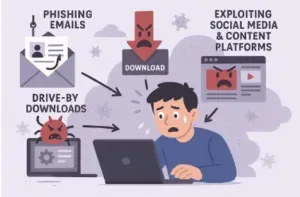
Infostealers are lightweight malware designed to quietly collect sensitive information from an infected device. Unlike ransomware, which announces its presence, infostealers aim to remain unnoticed while gathering valuable data.
Common targets include:
- Saved browser passwords
- Session cookies
- Authentication tokens
- Browser autofill information
- Cryptocurrency wallets
- Email credentials
- VPN credentials
The stolen data is then sold on underground marketplaces or used in future attacks.
For attackers, a single compromised device can provide access to dozens of corporate and personal accounts.
Session Hijacking: Bypassing the Password Entirely
Think about what happens after you log in to an application. Once your identity has been verified, the application remembers you by issuing a session cookie or authentication token. This allows you to browse without entering your password on every page.
It’s convenient for users. It’s also valuable to attackers. If attackers steal a valid session token, they may be able to impersonate the user without needing the password or even the second authentication factor.
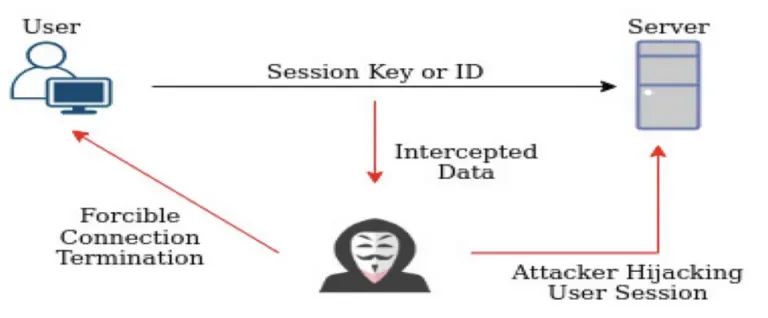
In many cases, the application assumes the attacker is the legitimate user because they’re presenting a valid authenticated session.
Why This Matters
This changes the way organizations think about identity security.
A strong password and MFA remain essential, but they are no longer enough on their own. Once an attacker gains access to an authenticated session, traditional login protections may no longer provide the same level of defense.
The focus shifts from simply protecting credentials to protecting the entire authentication process.
How Do Infostealers Spread?
Infostealer malware often reaches victims through everyday activities, including:
- Phishing emails
- Fake software downloads
- Cracked or pirated applications
- Malicious browser extensions
- Compromised websites
- Fake software updates
In many cases, users don’t realize their device has been compromised until their accounts begin showing suspicious activity.
Detecting the Threat
Because infostealers are designed to remain stealthy, organizations should monitor unusual account activity rather than relying solely on malware detection.
Warning signs include:
- Logins from unexpected locations
- Multiple sessions from different devices
- Unusual access times
- New browser fingerprints
- Unexpected privilege changes
- Suspicious downloads or data transfers
The question is no longer, “Was the password correct?”
It’s “Does this user behavior make sense?”
Staying Ahead of the Threat
While no single control eliminates the risk, organizations can significantly reduce exposure by adopting layered security practices.
These include:
- Enforcing MFA across all critical systems.
- Monitoring for unusual login behavior.
- Limiting browser-stored credentials where appropriate.
- Keeping operating systems and browsers updated.
- Using endpoint detection and response (EDR) solutions.
- Educating users about phishing and malicious downloads.
- Reviewing active sessions and revoking suspicious ones promptly.
Security today is about protecting identities not just passwords.
Modern attackers increasingly steal browser cookies, access tokens, and active sessions to bypass authentication altogether. As identity becomes the new security perimeter, organizations must focus on protecting sessions not just passwords.
Related articles
All insights
The Passwordless Future: Are Passkeys Finally Ending the Password Era?
The Password That Was Never There You woke up, checked your emails, logged into your company dashboard, reviewed your financial reports. Everything looked normal. But somewhere…

The Rise of Biometric Hacks
The Rise of Biometric Hacks: How Fingerprints and Faces Can Be Stolen When Convenience Becomes Risky It was a normal Tuesday morning in a busy tech office. A staff member unlocked…

Identity Security vs AI-Driven Threats
Securing the Future How Identity Security Protects Against AI-Driven Threats Introduction A succession of high-profile breaches worldwide has shown that even advanced economies…