Beyond the Fingerprint: Anthropic’s 500 Bug Blowout and the New Security Order
March 4th, 2026 - Written By CyberLabsServices
While the industry has long been locked in a cycle of tactical escalation, the introduction of reasoning-based analysis marks a transition from simple pattern recognition to sophisticated hypothesis generation.
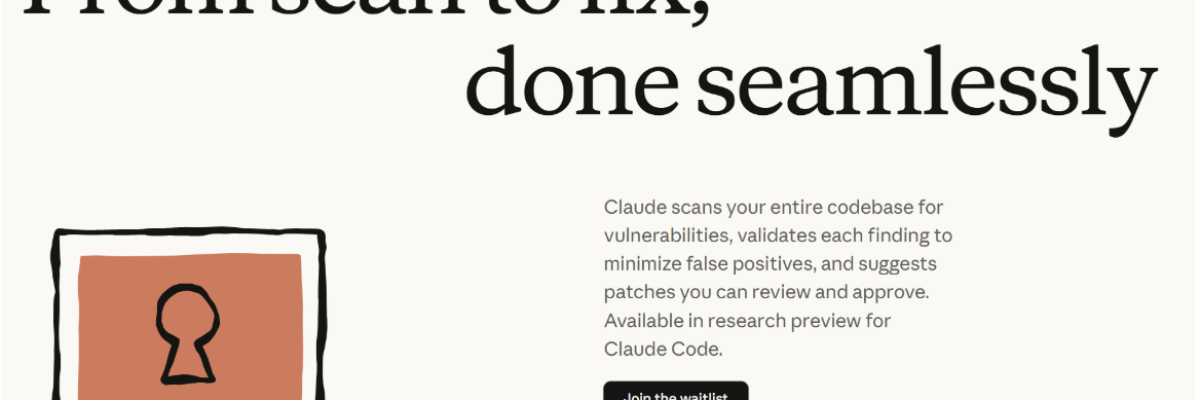
Anthropic’s launch of Claude Code Security following their discovery of over 500 high-severity vulnerabilities in production open-source code, marks a fundamental shift in how we protect the modern enterprise. For security leaders, this isn’t just another tool launch; it’s a mandate to rethink the “reasoning gap” in their vulnerability management stacks.
The End of the “Pattern-Matching” Era
For years, the industry has relied on Static Application Security Testing (SAST) and tools like CodeQL. These systems are highly effective at what they were built to do: finding known patterns of bad code. If a developer uses a dangerous function or leaves a common “fingerprint” of a bug, these tools flag it.
But Anthropic’s recent research proved that the most dangerous vulnerabilities don’t leave fingerprints. They hide in the logic, the history, and the complex interactions between different parts of a system.
By pointing Claude Opus 4.6 at codebases that had already been “cleaned” by traditional scanners and human experts, Anthropic found 500+ flaws. These weren’t simple typos; they were deep, structural issues that required human-like reasoning to uncover.
How “Reasoning” Changes the Defense
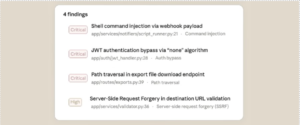
The differentiator for Claude Code Security is hypothesis generation. Instead of checking code against a list of “thou shalt nots,” it looks at a project the way a senior security researcher does.
- It connects the dots across files: It can look at a fix made in one part of a project and “reason” that if that fix was necessary there, a similar vulnerability likely exists in a completely different file even if no traditional rule flags it.
- It understands intent: It follows the “flow” of data through an application to see where business logic breaks down, catching flaws in access control that rule-sets consistently miss.
- It bridges the “fuzzer” gap: Traditional automated testing (fuzzing) often fails because it can’t figure out the complex “pre-conditions” needed to reach deep code paths. Claude can reason its way through those conditions to prove a vulnerability exists.
“The real shift is from pattern-matching to hypothesis generation,” says Merritt Baer, CSO at Enkrypt AI. “That’s a step-function increase in discovery power, and it demands equally strong human and technical controls.”
The “Dual-Use” Reality: A Closing Window
There is a sobering reality to this breakthrough: the same reasoning that allows a defender to find and patch a bug in three hours allows an attacker to find and exploit it just as quickly.
Anthropic’s researchers have been remarkably transparent about this tension. While they are “tipping the scales toward defenders” by offering this to Enterprise and Team customers first, the underlying model improvements are available to anyone with an API key.
For a CISO, this means the window of exposure has shrunk. If a vulnerability exists in an open-source library your company uses, an AI-powered attacker can now find it faster than a junior researcher. The only defense is to ensure your internal teams have the same or better reasoning capabilities.
Strategic Roadmap for Security Directors
As you prepare for the next board cycle, the conversation shouldn’t be about if you use AI for security, but how you govern its agency.
- Structural Re-Allocation: Your seven-figure security stack likely over-indexes on pattern-matching. It’s time to allocate budget toward reasoning-based analysis. Traditional scanners catch the “easy” stuff; tools like Claude Code Security find the catastrophic logic flaws.
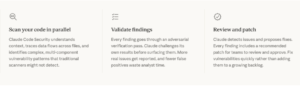
- Human-in-the-Loop (HITL) Governance: Claude doesn’t just find bugs; it suggests patches. However, “agency” brings risk. Every AI-suggested fix must undergo human review. You are shifting your team from “finding needles” to “approving the removal of needles.”
- Managing the Internal Threat Surface: As Merritt Baer points out, these tools don’t weaponize your code, they reveal how vulnerable it already was. But giving an AI agent the ability to explore your environment requires strict audit logging and data handling rules to prevent proprietary insights from leaking.
The Bottom Line
Anthropic’s discovery of 500 vulnerabilities in 15 days is a “standing budget justification” for a new era of security. We are moving away from a world of looking for “known bads” and into a world where we must proactively reason about our own risks.
The speed advantage in 2026 doesn’t favor the “good guys” by default. It favors the early adopters.