
Living Off the Land: When Legitimate Tools Become Cyber Weapons
June 24th, 2026 - Written By CyberLabsServices
The greatest trick an attacker can pull isn’t hiding malware on your computer; it’s convincing your computer to attack itself. It sounds like something out of a cyber-thriller, but it’s one of the most effective techniques used by modern threat actors today.
For years, cybersecurity teams have focused on detecting malicious files. Antivirus solutions searched for suspicious executables, endpoint security tools scanned for malware, and firewalls blocked known malicious traffic.
Attackers adapted. Instead of bringing their own tools, they began using the ones already installed.
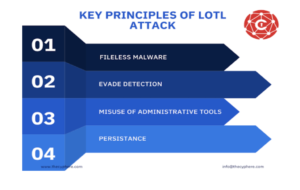
This technique is known as Living Off the Land (LotL), a strategy where attackers abuse legitimate operating system utilities and trusted administrative tools to carry out malicious activities while blending into normal system activity.
No malware downloads. No suspicious software installations. Just trusted tools performing untrusted actions. And that’s exactly what makes Living Off the Land attacks so dangerous.
What Is Living Off the Land?
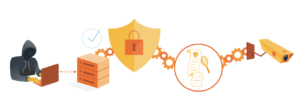
Every modern operating system includes a collection of built-in administrative tools designed to help IT professionals manage systems efficiently.
These tools automate tasks, manage services, execute scripts, troubleshoot problems, and administer remote systems.
They’re essential for day-to-day operations.
Unfortunately, they’re also useful for attackers.
Rather than introducing unfamiliar software that security products are trained to detect, attackers leverage existing tools that organizations already trust.
In Windows environments, commonly abused utilities include:
- PowerShell – Used for automation, scripting, and system administration.
- Windows Management Instrumentation (WMI) – Enables remote management and system monitoring.
- PsExec – Allows administrators to execute processes on remote systems.
- Scheduled Tasks – Automates recurring or delayed operations.
- Command Prompt (CMD) – Executes native Windows commands.
- Remote Desktop Protocol (RDP) – Provides remote access to systems.
- Windows Registry – Stores configuration settings that can also be manipulated to maintain persistence.
These tools are not vulnerabilities. They’re legitimate features of the operating system. The problem lies in how they’re used.
Why Attackers Prefer Living Off the Land
Imagine trying to enter a secure office. Walking through the front door wearing an employee badge attracts far less attention than climbing through a window. That’s exactly how Living Off the Land works.
 Since the tools are digitally signed by Microsoft and routinely used by administrators, their activity often appears legitimate. They Blend into Normal Activity. They Leave Fewer Footprints. By abusing built-in Windows tools instead of installing malware, attackers reduce the chances of detection by traditional security solutions.
They Bypass Basic Security Controls. Since organizations depend on these administrative tools for daily operations, attackers exploit this trust to operate with minimal suspicion.
A Different Kind of Cyberattack
A Living Off the Land attack often begins with compromised credentials or a successful phishing email. Instead of deploying malware immediately, attackers quietly use legitimate Windows tools to:
- Gather system information
- Identify privileged accounts
- Move laterally across the network
- Establish persistence
Because these actions rely on trusted utilities, attackers can remain undetected for days or even weeks while appearing to perform normal administrative tasks.
The Detection Challenge
Living Off the Land shifts the focus from detecting malicious tools to detecting malicious behavior. Instead of asking, “Is this tool malicious?” security teams must ask “Is this behavior expected?” This makes behavioral analytics, endpoint monitoring, and continuous visibility essential for detecting LotL attacks.
Why This Matters for Security Operations
Living Off the Land techniques are increasingly used in ransomware attacks, Advanced Persistent Threats (APTs), and targeted intrusions because they allow attackers to stay hidden longer.
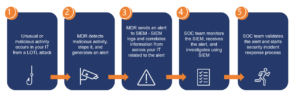
For SOCs and blue teams, detection relies on understanding context rather than simply identifying tools.
Key questions include:
- Who is using the tool?
- When is it being used?
- From where?
- Does the activity align with normal business operations?
Threat hunting is equally important, helping analysts identify unusual behavior before it escalates into a major incident.
Reducing the Risk
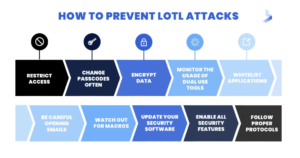
Organizations shouldn’t remove legitimate administrative tools. They’re essential for business operations. Instead, they should reduce opportunities for misuse by:
- Maintaining an inventory of administrative tools and privileged accounts.
- Enforcing the principle of least privilege.
- Monitoring PowerShell, WMI, and remote administration activities.
- Logging and reviewing administrative actions.
- Strengthening identity and access management.
- Using behavioral monitoring to detect anomalies.
- Regularly educating IT and security teams on emerging attack techniques.
Ultimately, effective security isn’t just about blocking malware, it’s about recognizing when legitimate tools are being used in illegitimate ways.
The Future of Detection
As attackers increasingly rely on trusted tools and valid credentials, organizations must focus on detecting unusual behavior, not just malicious software. Living Off the Land demonstrates that the greatest threats aren’t always introduced into an environment. they’re often the legitimate tools already there, used with malicious intent.